Every structure must absorb forces and transfer them in a controlled manner. If it fails to do so, a frame can bend, tilt, or buckle—even if each individual component is strong enough on paper. Structural engineering revolves around how the assembly functions as a whole. It is a vital aspect to tackle right from the earliest stage of technical product development.
At Lencon, we investigate how forces flow through a structure, which connections are essential and how much stiffness is required. By answering these questions as early as possible, we can reduce technical risks and test the feasibility of the design.
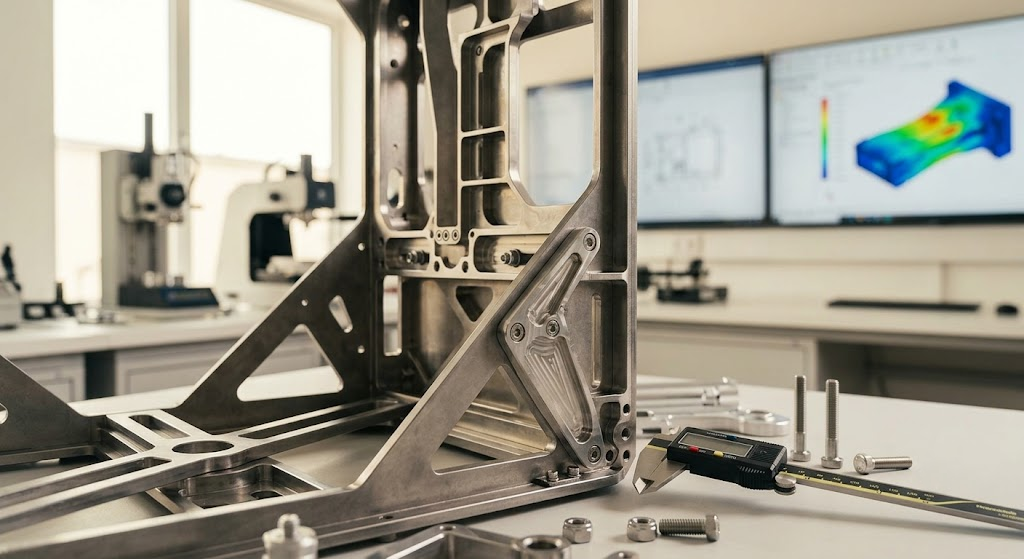
Using smart geometry can deliver substantial benefits for a structure. A prime example is the PodoPrinter, where the frame acted as the skeleton to which all the technology was mounted. Thanks to screw connections in the sheet metal, welding and bending were not required. This made the machine simpler and cheaper to assemble, significantly reducing the part count.
Structural engineering and mechanics of materials are closely related. The key difference is that mechanics of materials focuses on the stresses within a single component, whereas structural engineering looks at the behaviour of the complete product. For both, our thorough expertise in materials science is indispensable.