Can a component withstand the expected load without excessive deformation or failure? That is the core question of structural mechanics. This discipline provides insight into how stresses and deformations arise within a component or structure.
At Lencon, we use structural mechanics to support our design choices. How thick should a wall be, where are the critical points, and how much margin is required? We look beyond static loads to consider fatigue from repeated movements and behaviour under peak forces. This allows us to avoid over-engineering and save on weight and BOM costs.
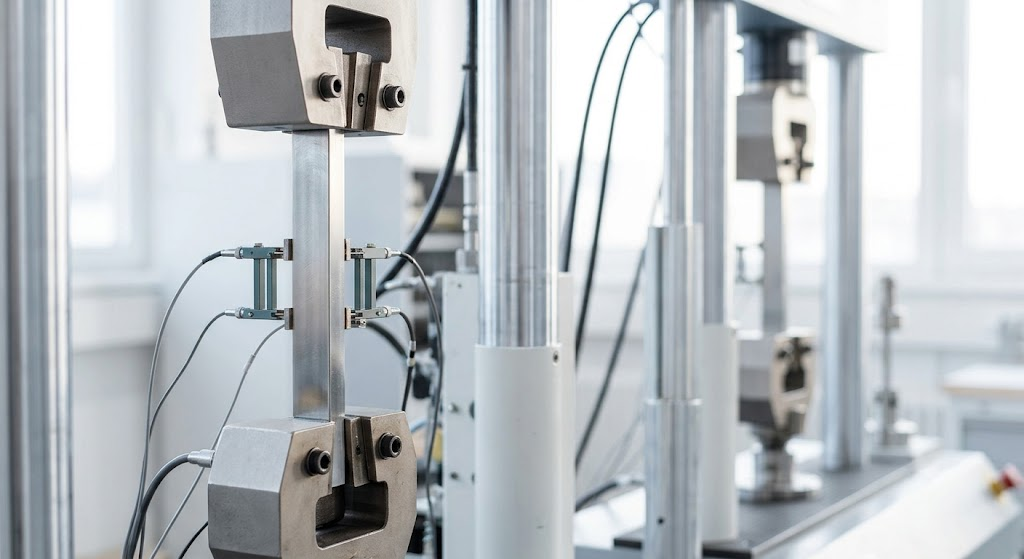
Strength of materials goes hand in hand with materials science, as calculations are only as reliable as the underlying material properties. For complex geometries where manual calculations fall short, we use FEA. And when it comes to larger load-bearing structures, structural mechanics seamlessly connects with structural engineering.
Loads often stem from motion. That is why we use dynamics to map out forces during operation. In this way, mechanics of materials provides the technical substantiation required in demanding sectors such as defence, aerospace, and aviation. Without that foundation, mechanical engineering is ultimately little more than educated guesswork.