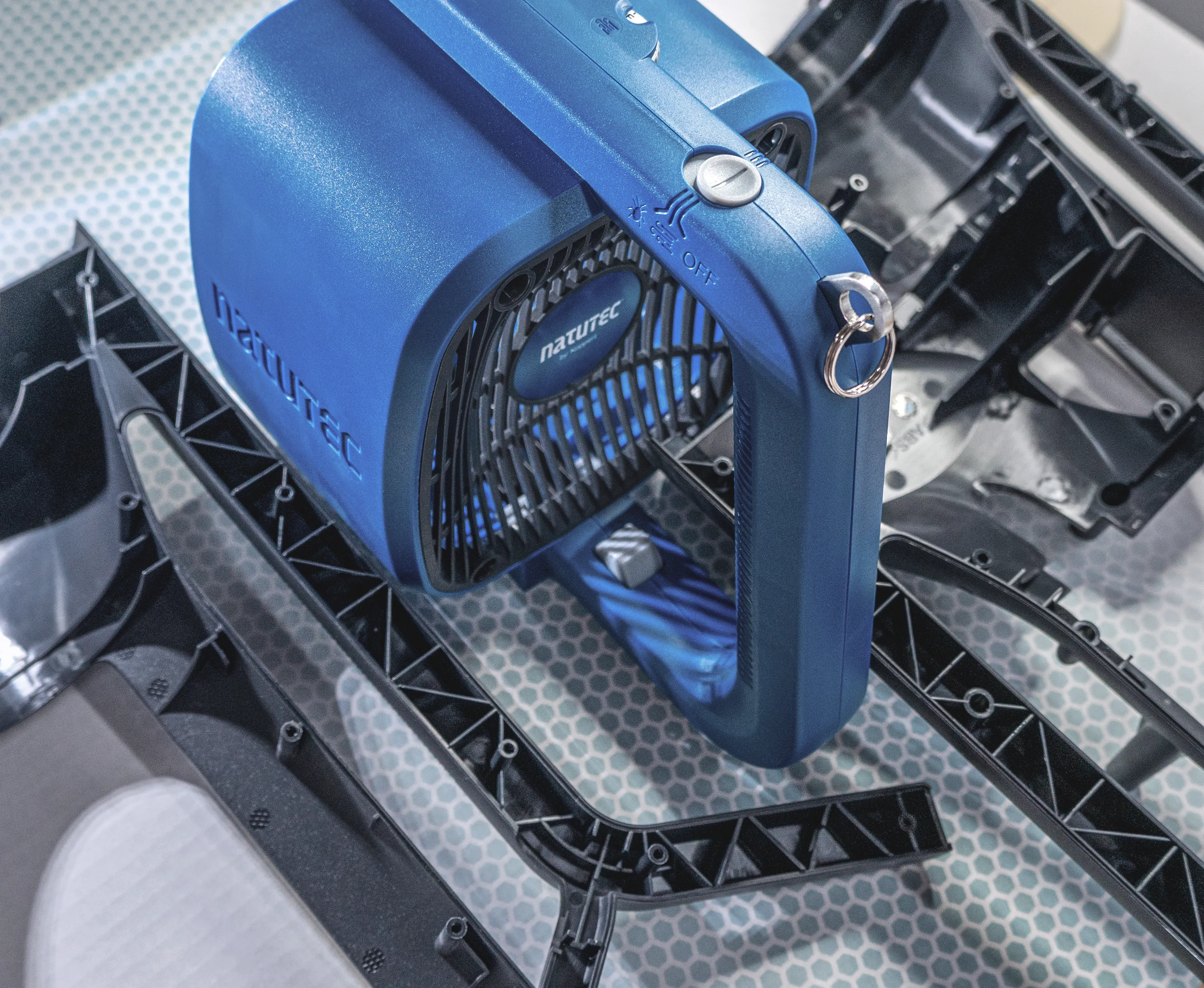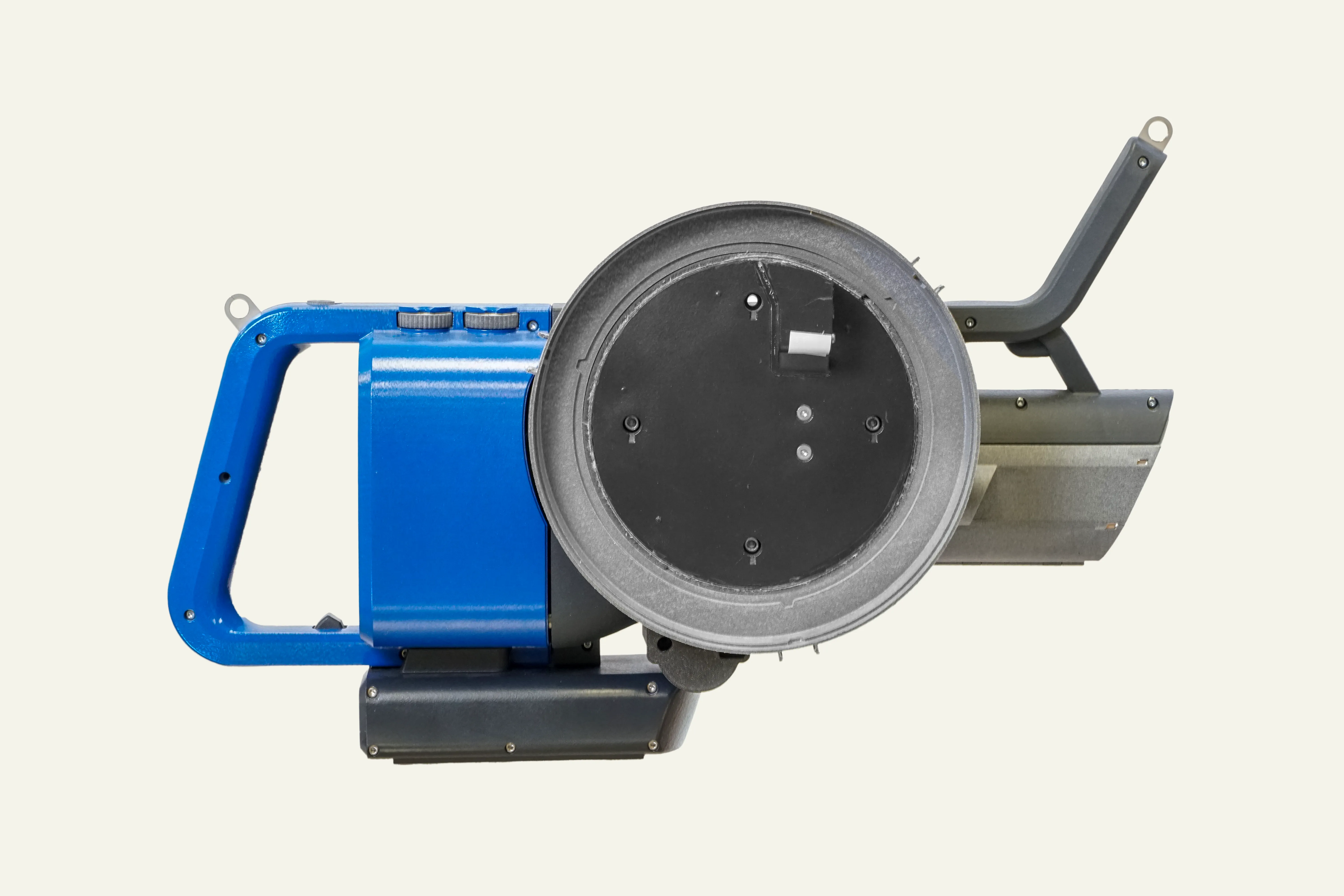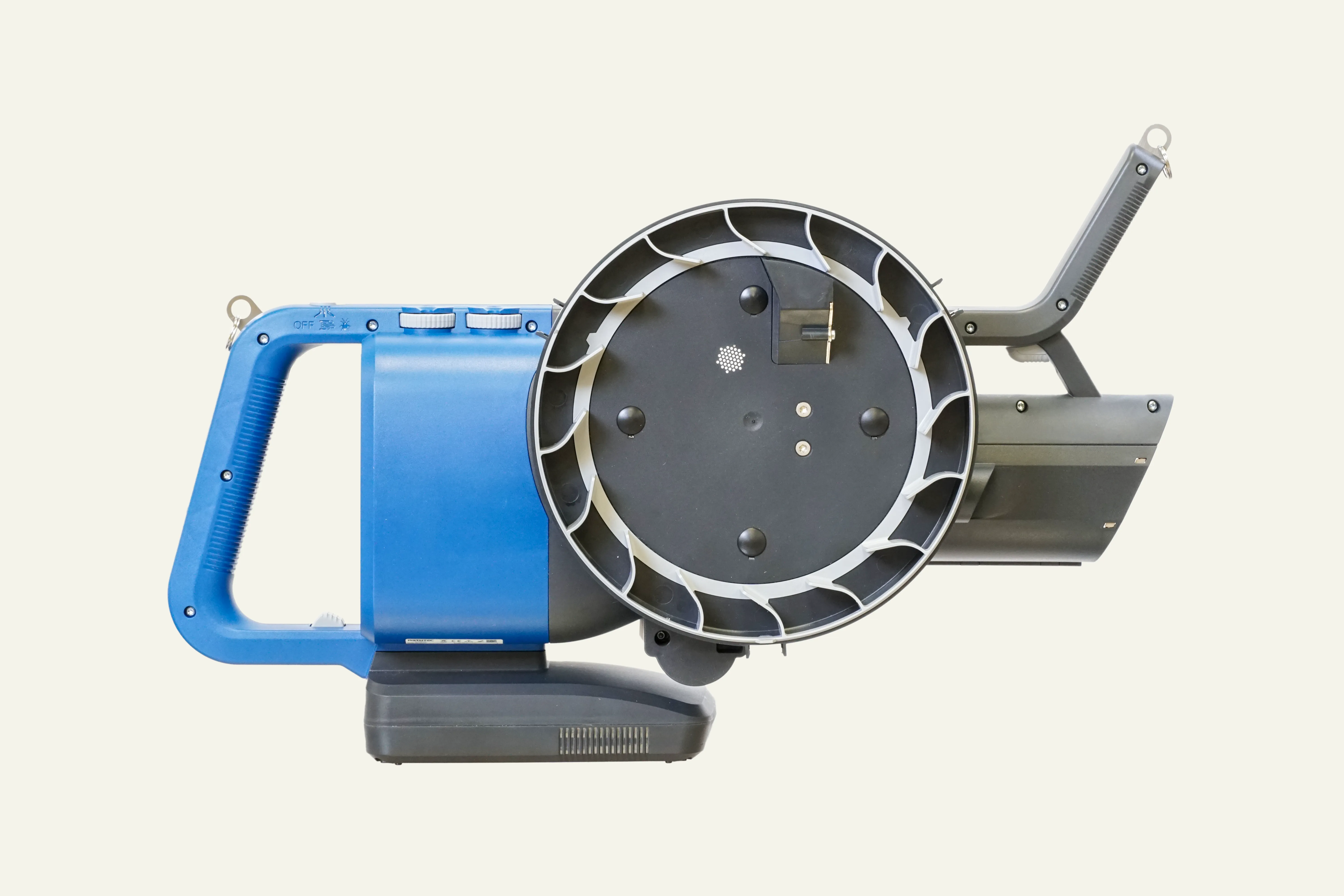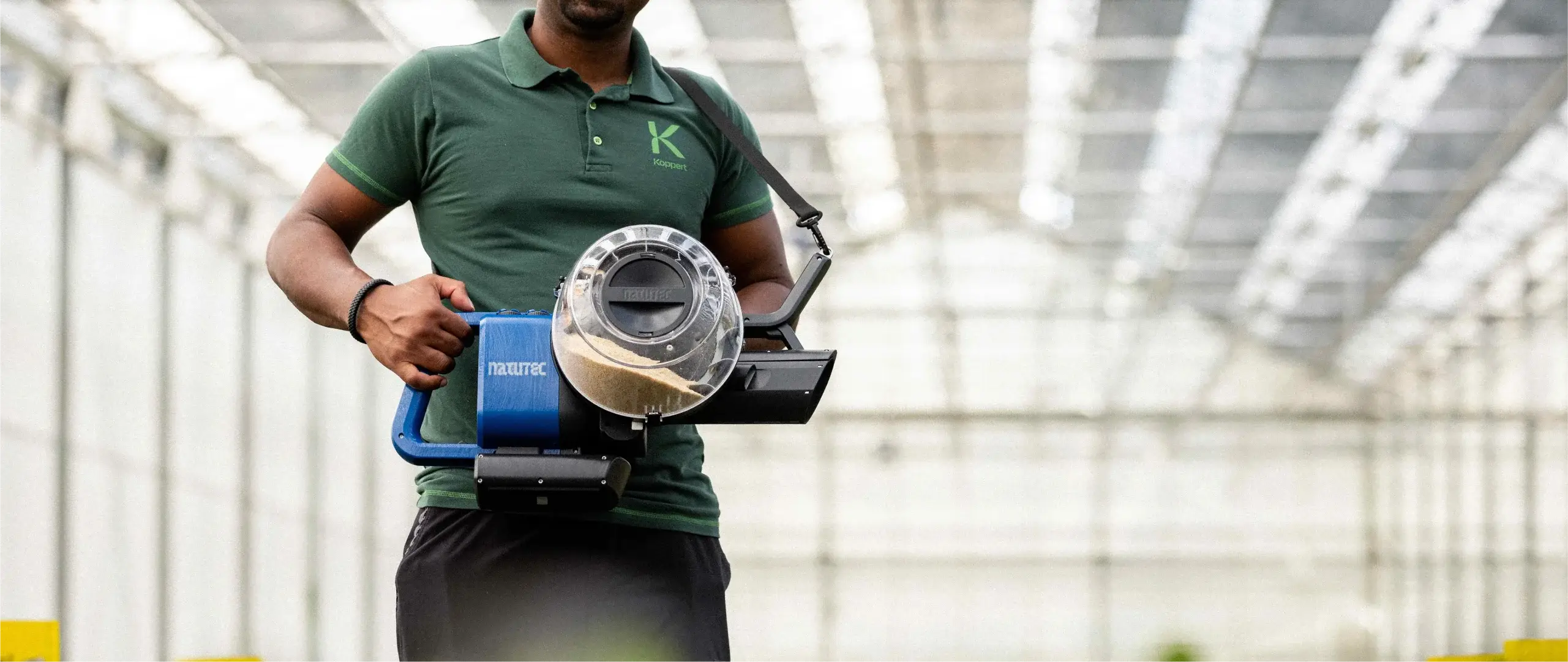

Koppert is a Dutch company active worldwide in sustainable agriculture and biological crop protection. They are best known for their nature-based solutions that help growers cultivate crops that are healthier, more productive, and more environmentally friendly than those grown with traditional chemical agents. Their distribution systems were outdated and required a more user-friendly, faster, and more reliable alternative. From strategy to production, Lencon developed a system with 2 patents, 22 injection-moulded parts, and a smart balance between design, engineering, and scalability.

Maikel
Product
Manager
Name
Title / Function
Name
Title / Function

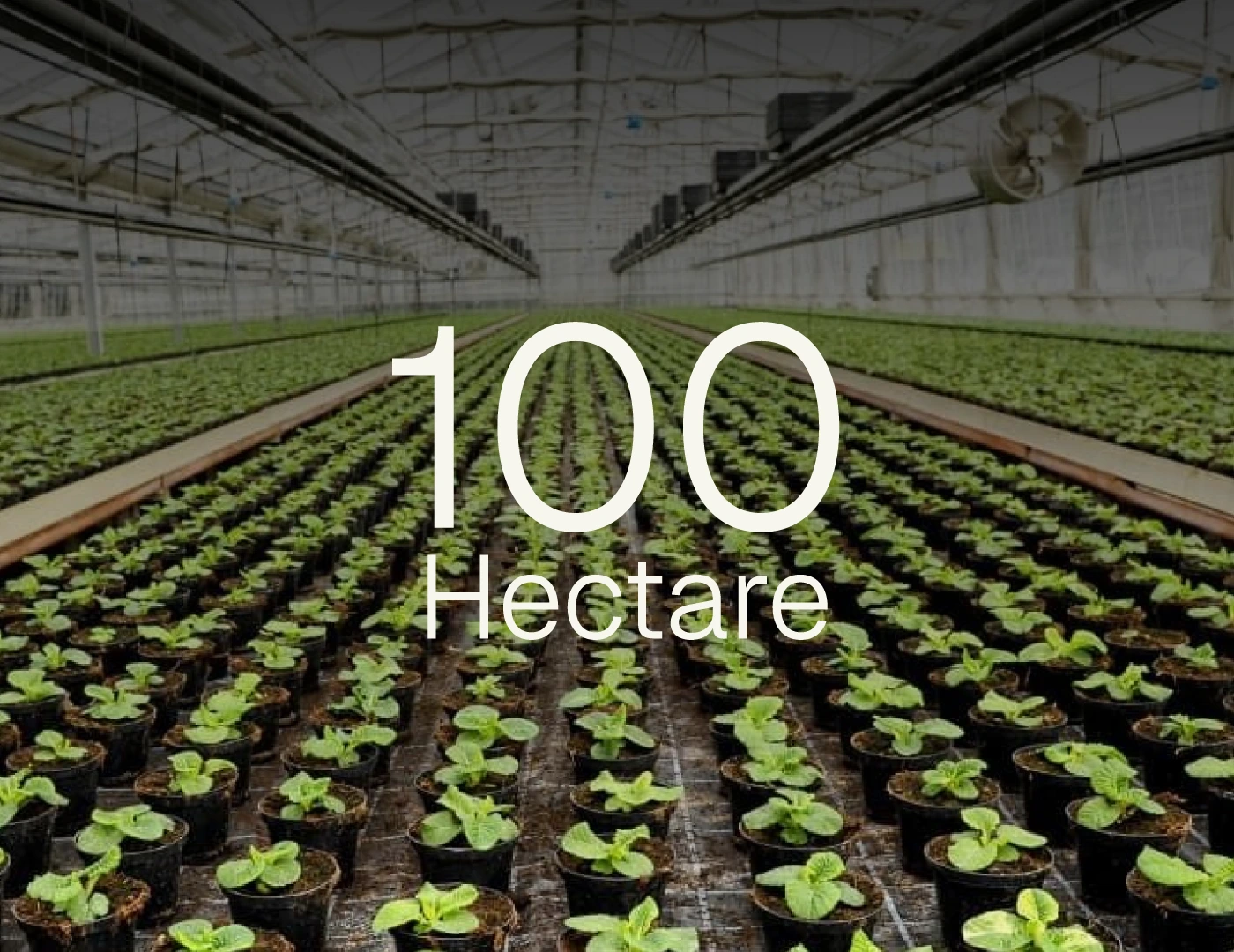
Biological control in greenhouses has specific requirements: living organisms must be distributed without damage, over distances of several metres, with a constant dosage. At the same time, the device must remain portable for users who work in greenhouses all day. The result: a device that reduces workload and aligns with how people actually work in horticulture.
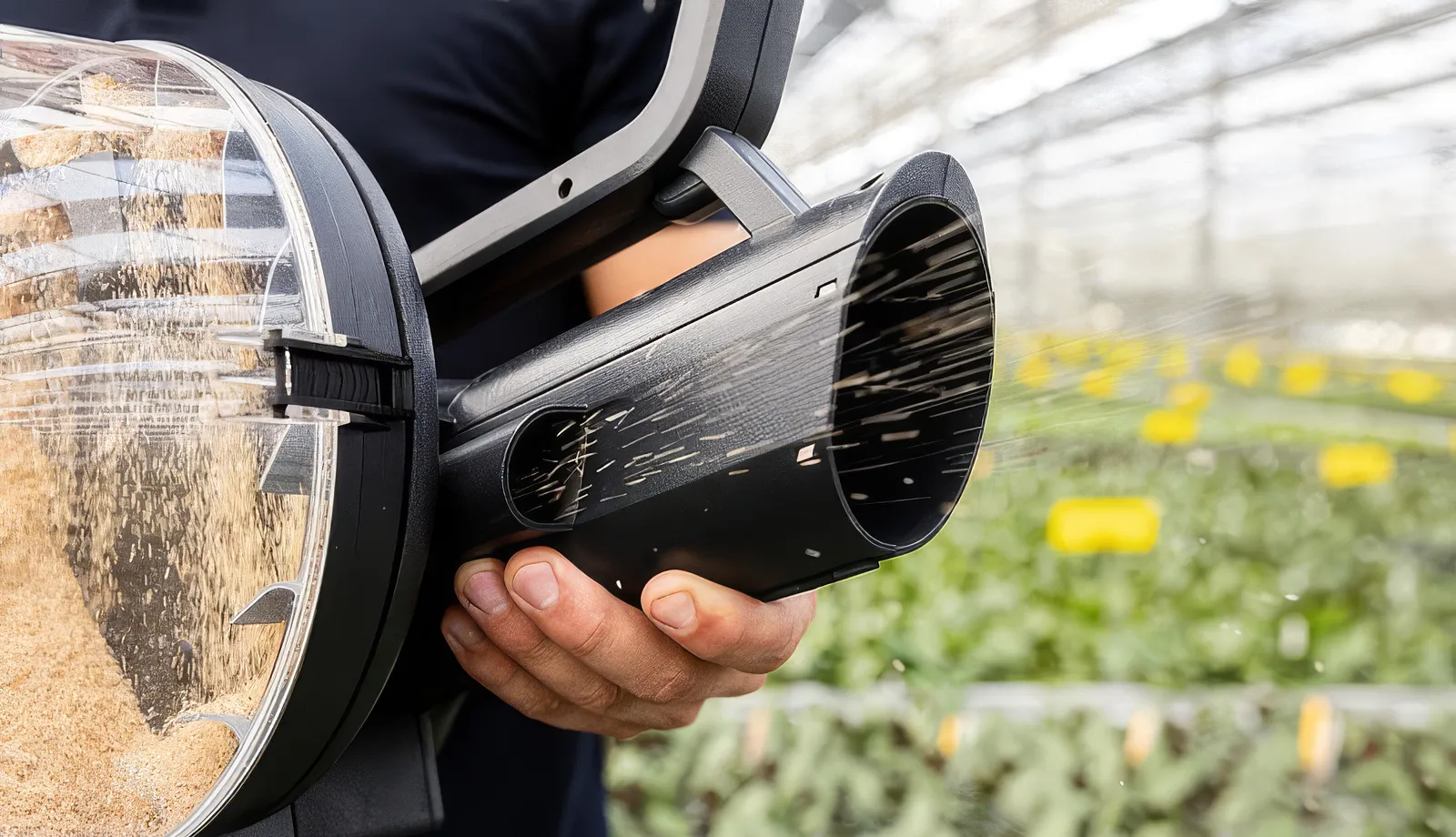
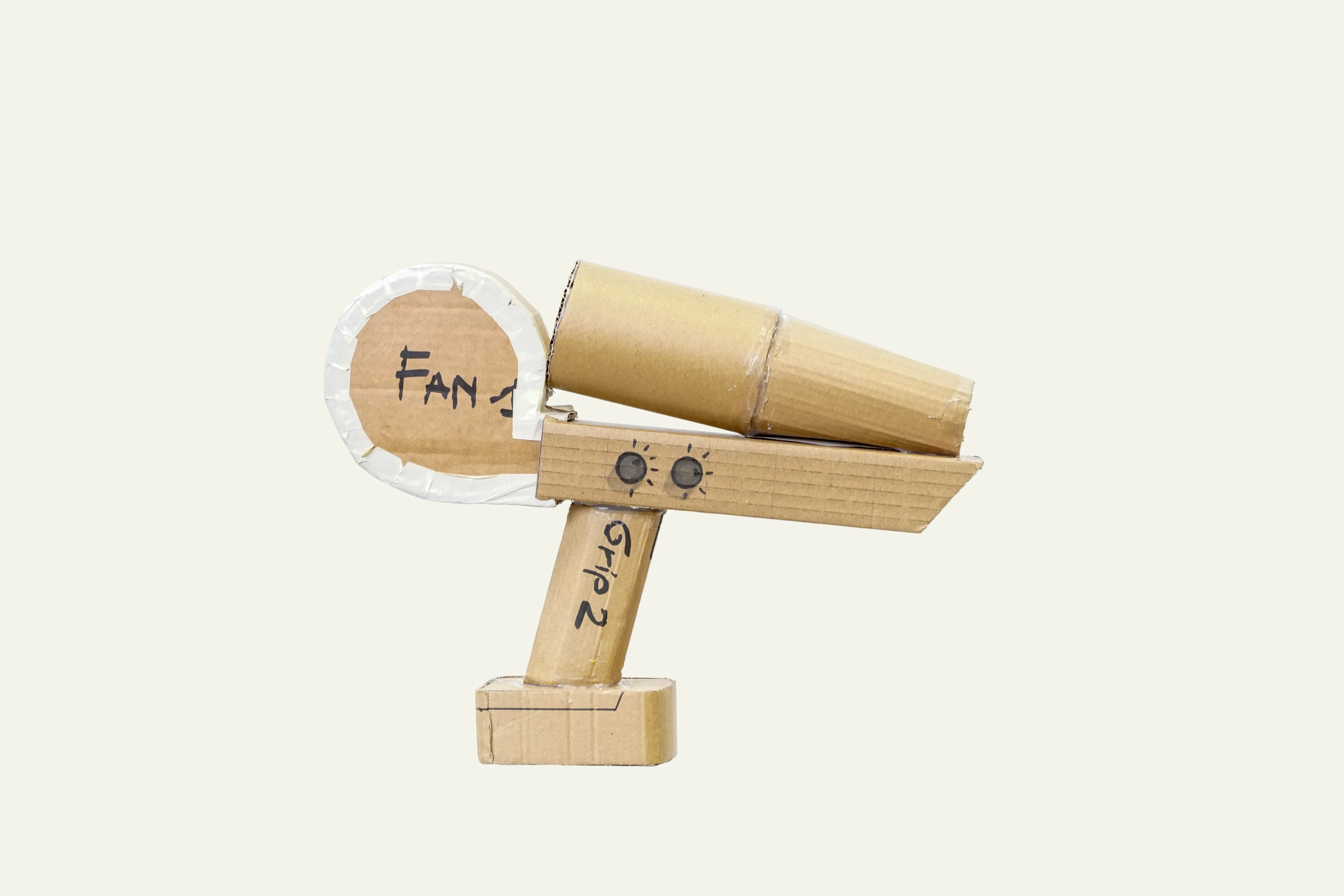
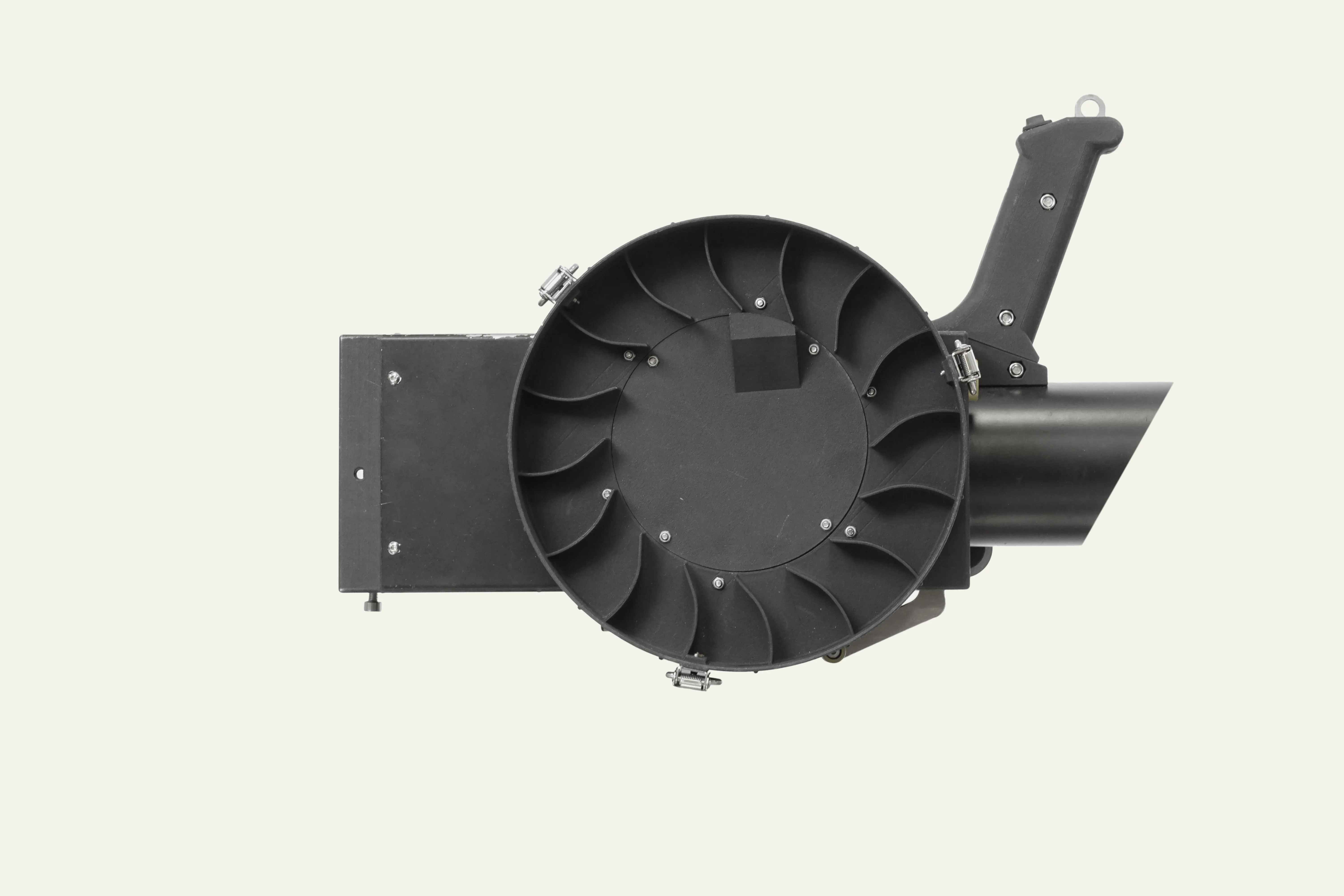
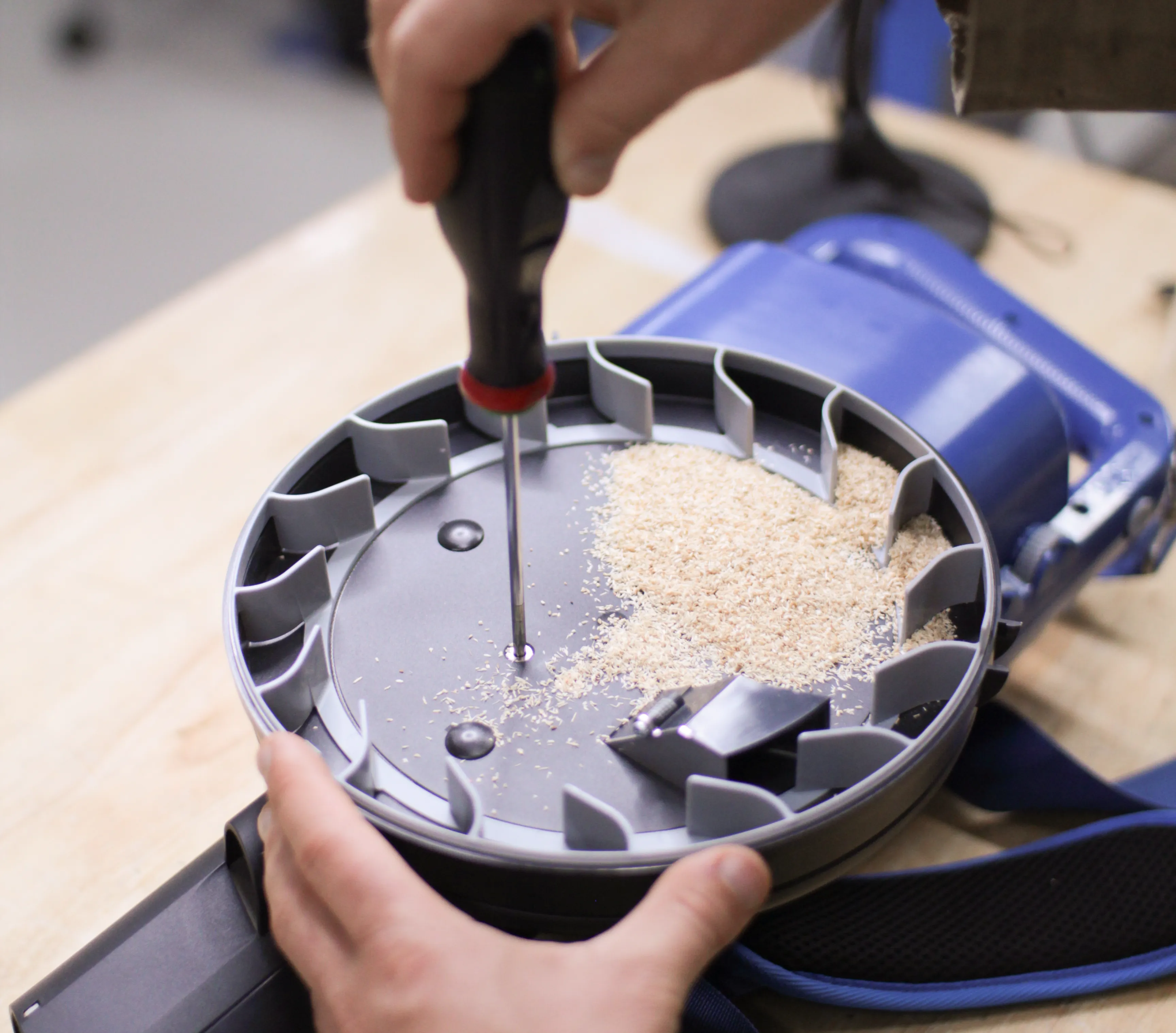
Finding suitable operating principles was central. Using models and prototypes, Lencon tested the system's versatility, accuracy, and mortality rates. Performance was demonstrated pragmatically: both in controlled conditions and in the field. Theoretical analyses such as CFD and FEM were always backed up by practical tests: drop tests, endurance tests, and field tests. The end result: a system with reliable components, proven performance, and a look that fits the Koppert brand identity. Practically tested, theoretically sound.

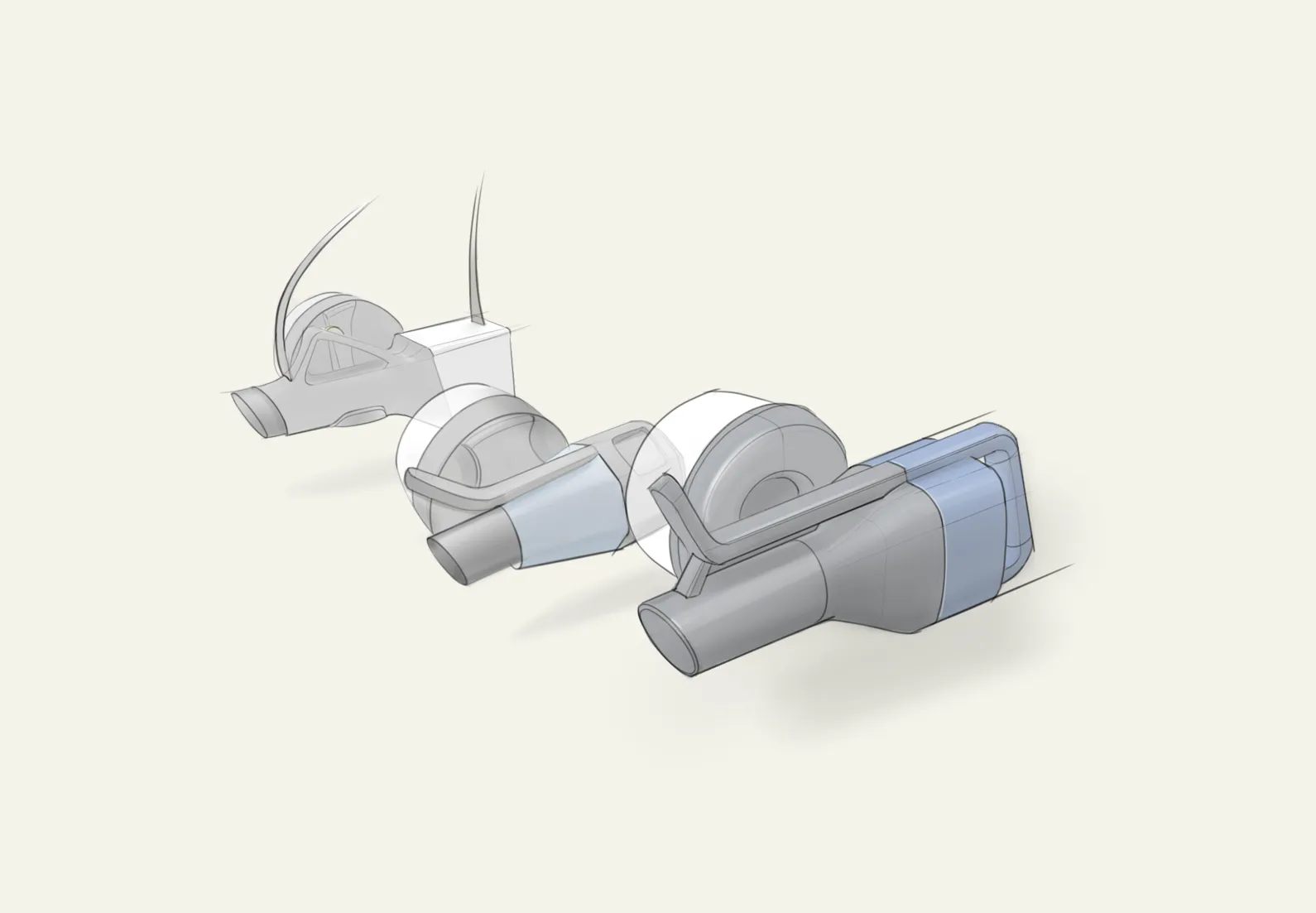
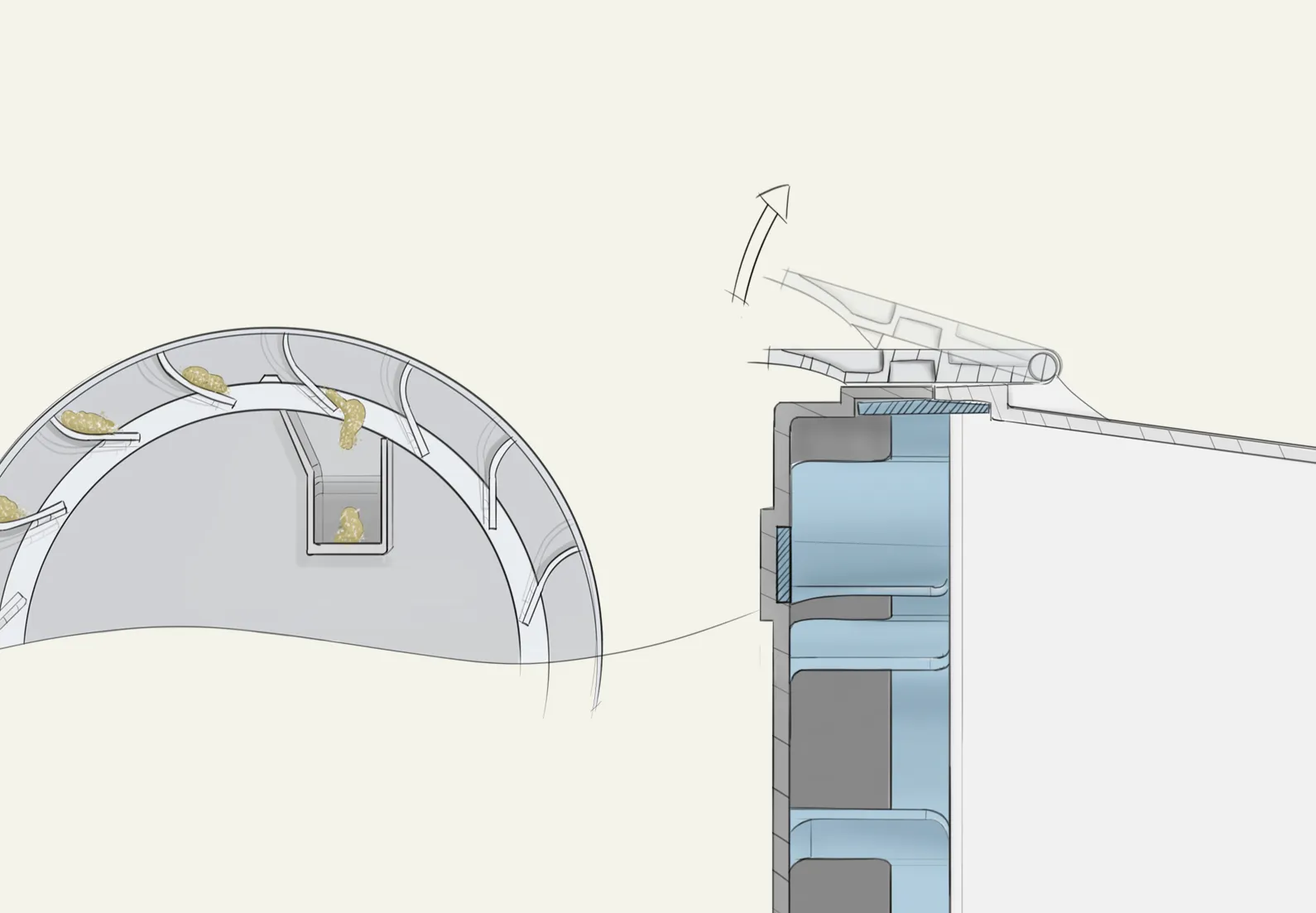
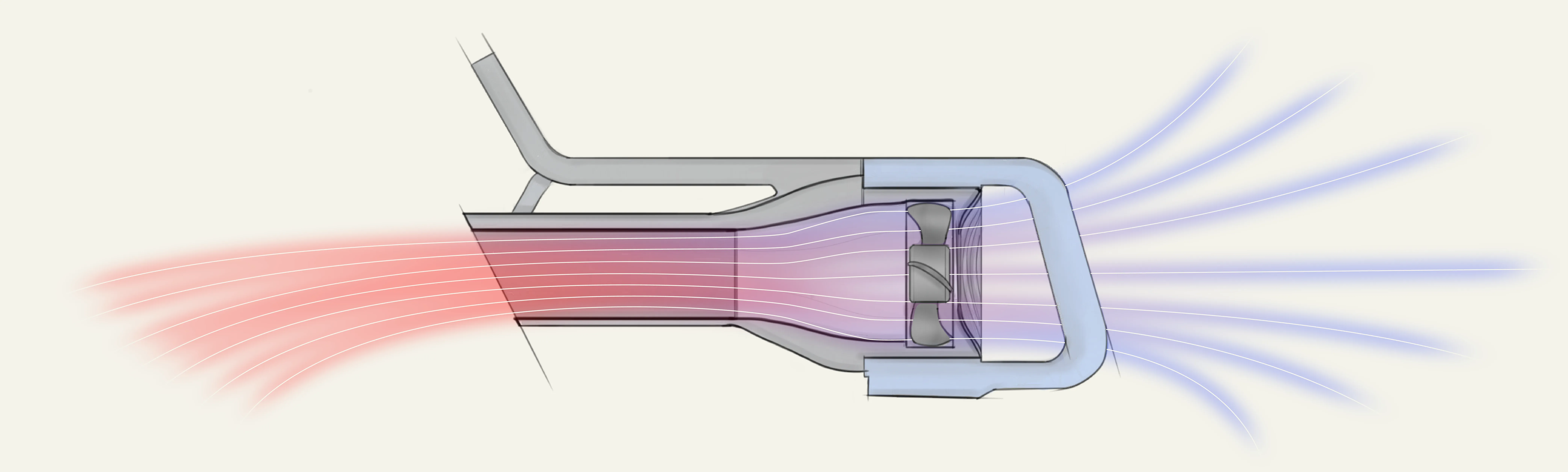
Airflow analyses require specific simulation software. For this, Lencon collaborated with our development partner Actiflow to determine the achievable blow distance and distribution using both a theoretical and a pragmatic approach.
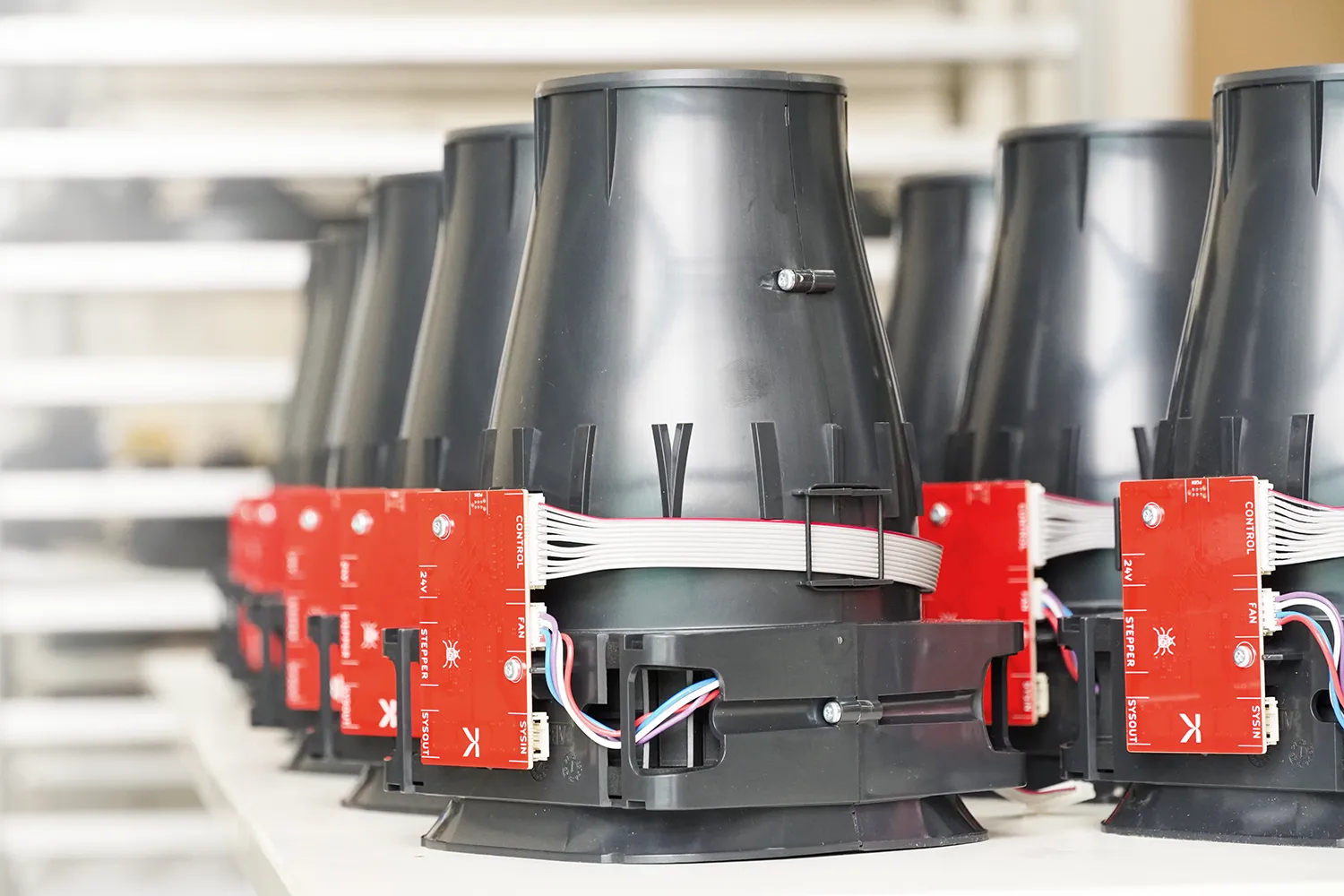
It was also essential to predict the electrical power required to deliver the performance over the agreed usage duration. Here too, Actiflow's analyses were necessary to keep the system as efficient as possible and the battery as compact as possible.
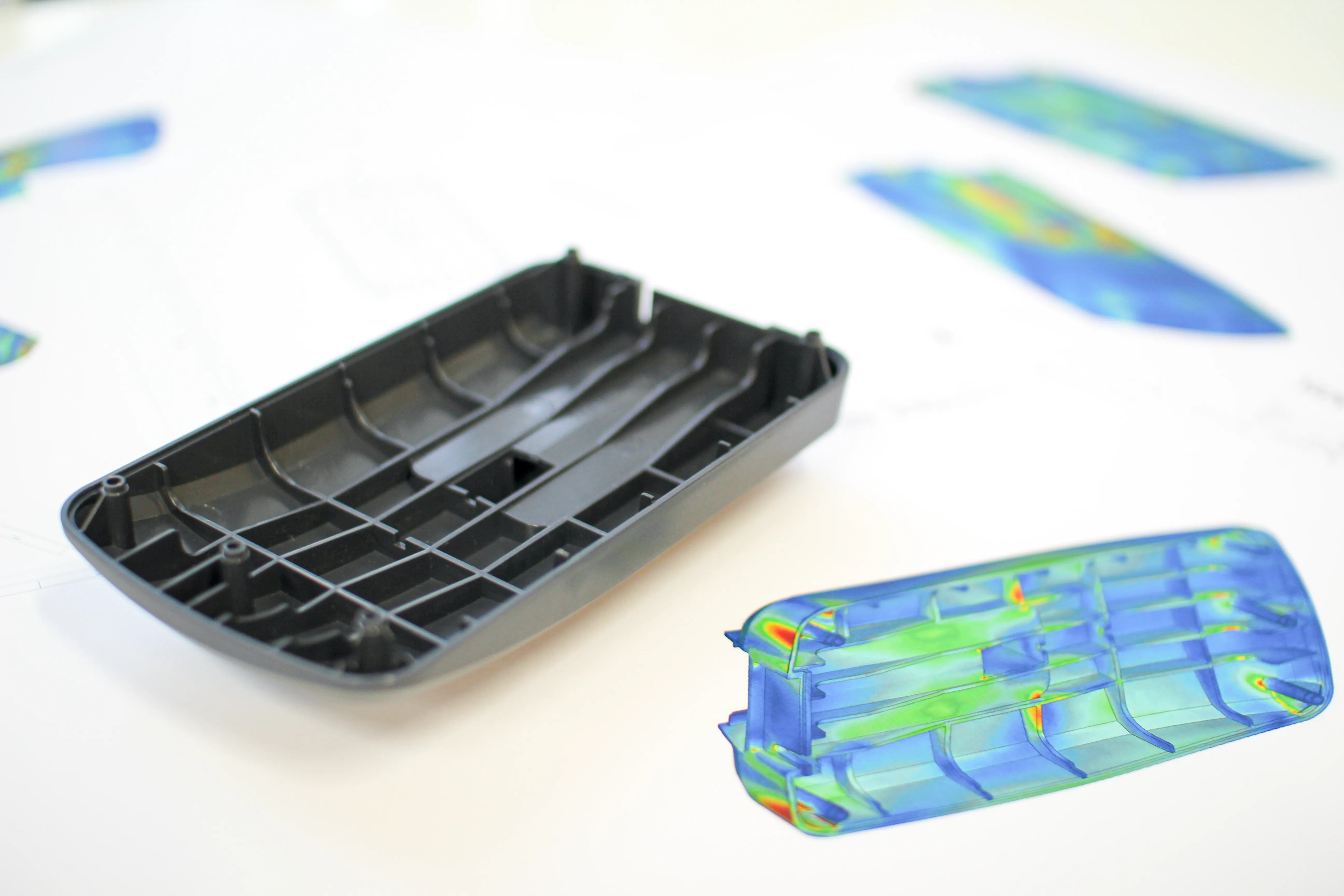
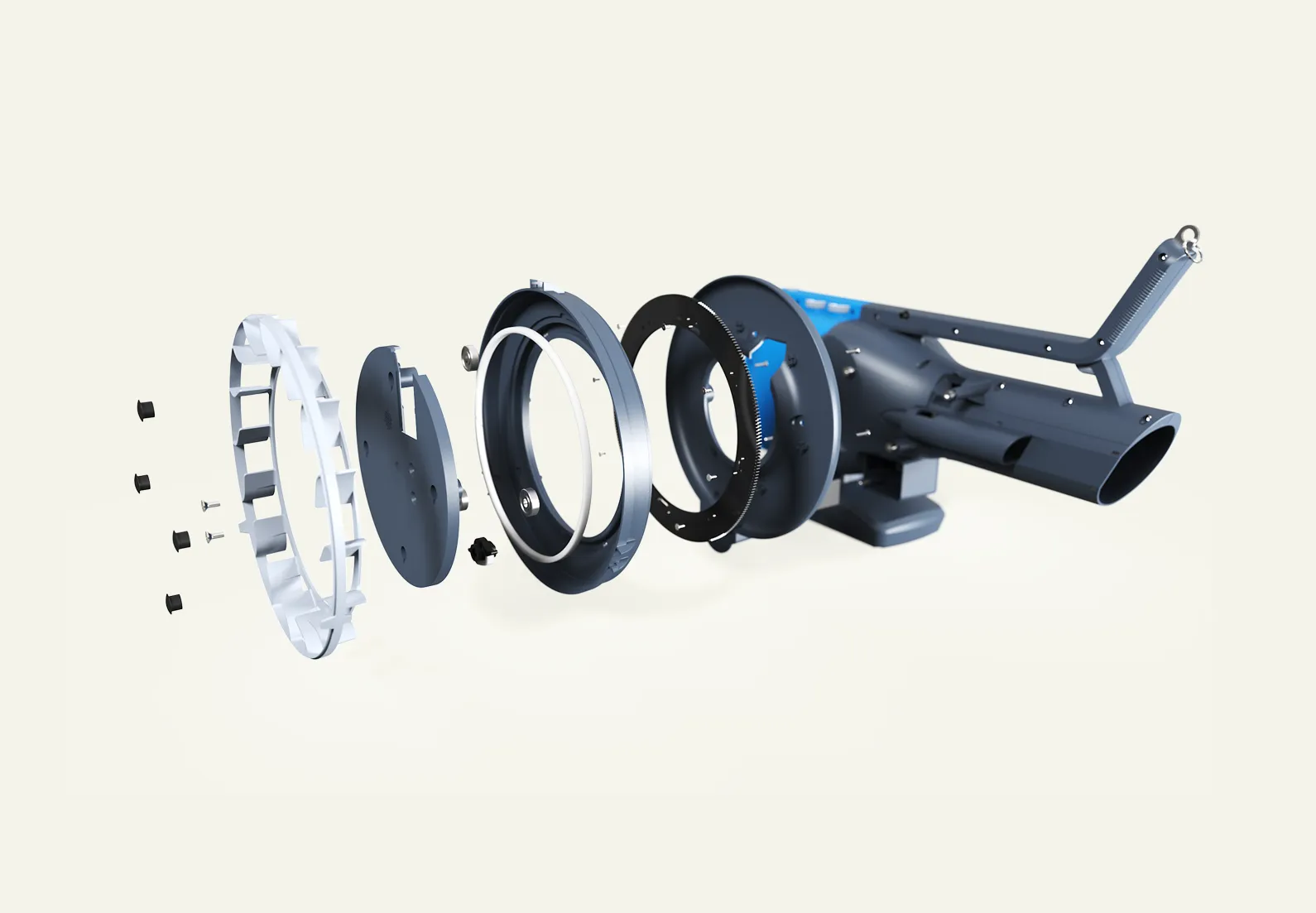
It starts with complex 3D geometry: well-considered ribbing that provides strength without weight, wall thicknesses that balance production and durability, and assemblies that distribute loads.
FEM analyses showed where stresses occur during use and drops. These insights guided the design: reinforcements where necessary, material savings where possible. Tolerance analyses ensured that the design continues to function accurately even after thousands of units have been produced.